
What is an Incense Stick? Meaning, Uses & How to Choose
A beginner-friendly guide to incense sticks, their meaning, common uses, fragrance types, and how to choose the right incense for pooja, meditation, gifting and home fragrance.
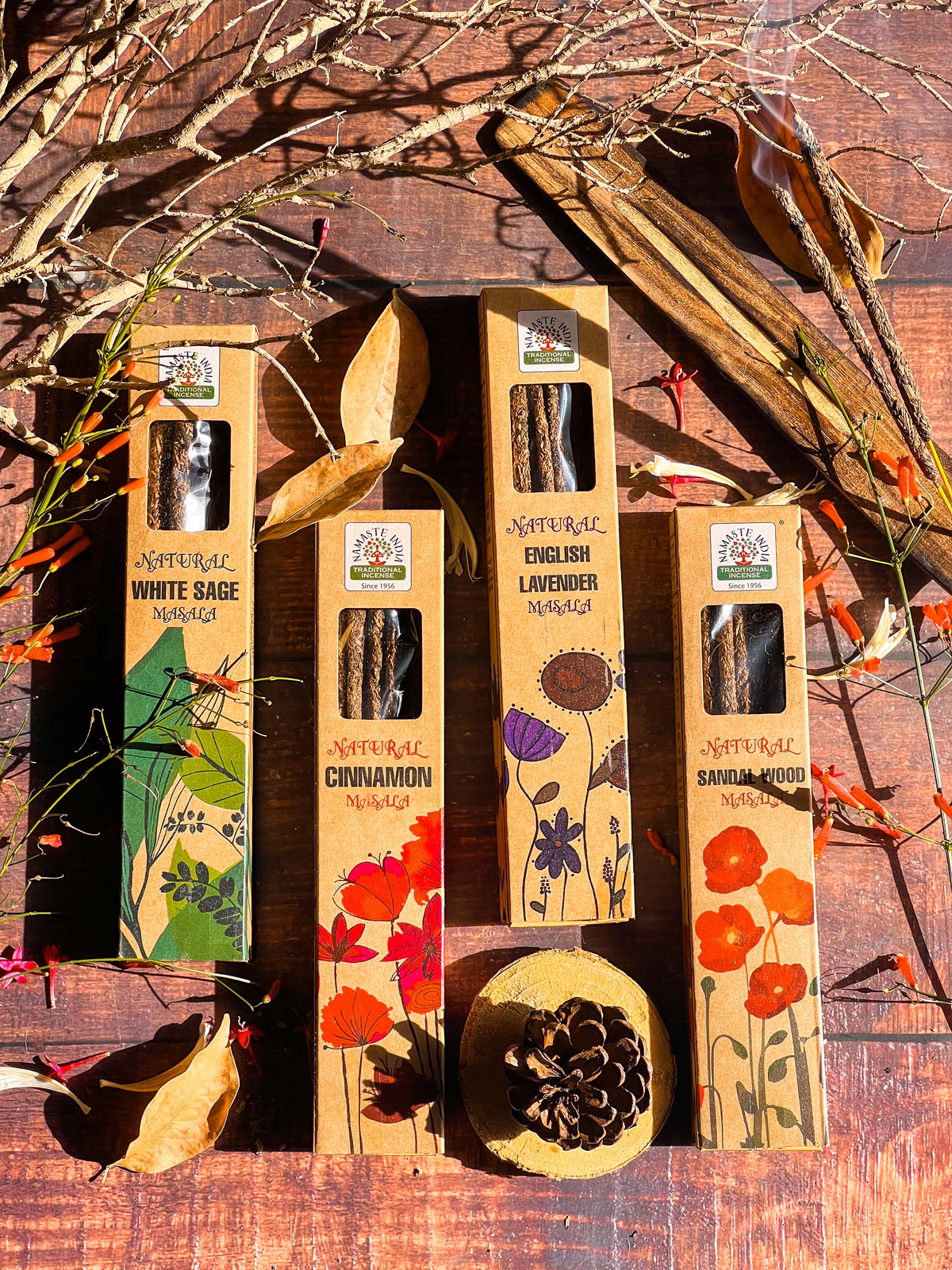
An incense stick is a fragrant stick that releases aroma when lit and allowed to smoulder. In India, incense sticks are also commonly called agarbatti and are used for pooja, meditation, relaxation, rituals and everyday home fragrance.
If you are new to incense, this guide explains what an incense stick means, how it is used and how to choose the right fragrance for your home.
What is an incense stick?
An incense stick is a stick-shaped fragrance product that is burned slowly to release aroma into a room. It is usually placed in an incense holder or stand, lit at the tip, and then allowed to smoulder after the flame is gently blown out.
At Namaste India, you can explore traditional agarbatti-style fragrances and modern incense stick collections through the Incense Sticks collection.
Is incense stick the same as agarbatti?
In India, incense sticks are commonly called agarbatti. The word agarbatti is widely used for daily pooja and home fragrance products, while “incense sticks” is also used in modern fragrance, export and online shopping contexts.
What are incense sticks used for?
- Pooja: to create a devotional atmosphere for prayer and daily rituals.
- Meditation: to make a space feel calm, focused and grounded.
- Home fragrance: to make bedrooms, living rooms and prayer corners smell pleasant.
- Yoga: to create a mindful and peaceful environment.
- Relaxation: to support evening wind-down routines.
- Gifting: to share fragrance sets during festivals and housewarmings.
Different types of incense sticks
Traditional incense sticks
Traditional incense sticks are suitable for daily pooja, prayer and familiar home rituals. Explore Traditional Incense Sticks.
Natural incense sticks
Natural incense sticks usually focus on earthy, botanical, resinous or grounding fragrance profiles. Read Natural Agarbatti vs Regular Incense Sticks.
Luxury incense sticks
Luxury incense sticks are designed for richer fragrance experiences, premium gifting and elevated home fragrance. Read Luxury Incense Sticks.
Loban incense sticks
Loban incense sticks are suited to grounding and intention-led rituals. Read What is Loban Dhoop?.
Dhoop cones
Dhoop cones are another popular incense format. Backflow dhoop cones create a downward smoke-fountain effect with a compatible burner. Read Best Dhoop Cones & Dhoop Sticks.
Best incense sticks for pooja
For pooja, choose fragrances that feel traditional, peaceful and devotional. Sandalwood, Chandan, Rose, Jasmine, Kesar Chandan and Nag Champa are good choices. Read Best Agarbatti for Pooja.
Best incense sticks for meditation
For meditation, choose calming and grounding fragrances. Palo Santo, White Sage, Sandalwood, Myrrh, Patchouli, Loban and Nag Champa are suitable options. Read Best Incense Sticks for Meditation.
How to choose the right incense stick
- For pooja: choose Chandan, Sandalwood, Rose, Jasmine or Nag Champa.
- For meditation: choose Palo Santo, White Sage, Myrrh, Loban or Sandalwood.
- For relaxation: choose Lavender, Chamomile, Patchouli or Rose.
- For freshness: choose Lemongrass, Rosemary, Orange or fruit-inspired fragrances.
- For gifting: choose bestsellers, assorted sets or luxury incense.
Related reading
- Best Agarbatti & Incense Sticks in India
- Natural Agarbatti vs Regular Incense Sticks
- Best Dhoop Cones & Dhoop Sticks
FAQs
What is the meaning of incense stick?
An incense stick is a fragrant stick that is burned slowly to release aroma. It is used for pooja, meditation, relaxation, rituals and home fragrance.
How do you use an incense stick?
Place the incense stick in a holder, light the tip, let it catch flame briefly, then gently blow out the flame so the stick smoulders and releases fragrance.
Explore the full range: Shop Incense Sticks by Namaste India.